
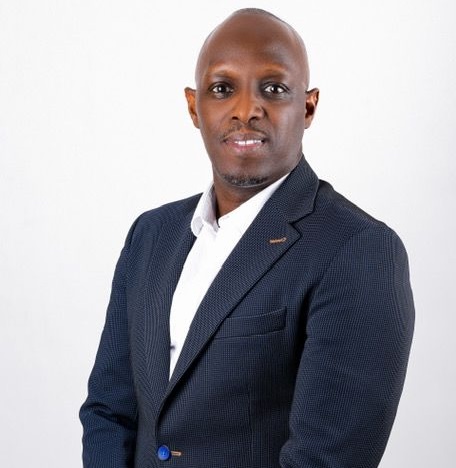
Few scientists have shaped an entire field in a country the way Prof. Leon Mutesa has for human genetics in Rwanda, working toward rigorous science, institution-building, and community-centered impact over two decades. His impressive portfolio includes pioneering epigenetic studies on intergenerational transmission of PTSD among survivors of the 1994 Genocide against the Tutsi, bolstering national capacity for genomics, trials, and biomanufacturing, and training a new generation of Rwandan geneticists. I had the pleasure of talking to him about his research, and the takeaway was clear: think ambitiously, build steadily, and always turn knowledge into impact.
Discovering the Genetic Basis of intergenerational Trauma
Prof. Mutesa’s most recognized contribution began with a local observation fifteen years ago, during Rwanda’s annual genocide commemoration periods: he noticed persistent mental health symptoms among secondary-school students, who were experiencing anxiety, depression, and hallucinations despite never being directly exposed to the 1994 atrocities. He told me, “every year during commemoration, I kept seeing students in crisis—anxiety, depression, even hallucinations—and I kept asking why children not directly exposed were experiencing this?” That curiosity sparked a qualitative study that uncovered how these children were linked. They were all born to women who were pregnant during the 1994 Genocide against the Tutsi, and had experienced forms of physical, emotional or sexual violence. This led Prof. Mutesa down a journey of genomic and epigenetic research that explored how trauma can echo across generations through biological pathways. Prof. Mutesa’s story reflects my favorite type of science which starts with an observation that sparks a question, finds answers through rigorous scientific methodology, and translates them into solutions that matter in daily life.
Prof. Mutesa’s team’s early analyses suggested that exposure to trauma induced biological changes in the regulatory regions of mothers’ DNA (the “software” that controls when genes switch on and off), which they passed on to their offspring. These alterations were linked to depression, anxiety, and other symptoms of PTSD, and were not present in a “control” sample of children whose mothers had no prior trauma exposure. Prof Mutesa’s research group also measured stress-related biomarkers (which reflect how the stress-response system is functioning), and found higher levels of stress-hormones such as cortisol in the children of genocide survivors compared to the control group. These signals were not temporary: they remained measurably different many years later, indicating a long-lasting alteration in gene regulation that’s associated with prenatal exposure to extreme stress. Prof. Mutesa’s team is now studying whether these malfunctional genetic alterations were also passed on to the third-generation, a.k.a the grandchildren of genocide survivors. What began as a small pilot study has now grown into a multi-year program supported by major funders, which allowed the team to follow a defined cohort of participants over a long time, collecting rich insights into the mechanisms of intergenerational PTSD transfer and potential genetic targets for therapeutic interventions.
A Commitment to building rwanda’s research ecosystem
Alongside scientific discovery, Prof. Mutesa has been heavily involved with efforts to build the ecosystem needed for sustained excellence in research. He has worked towards building practical systems that improve care. In women’s health, his team’s HPV screening and cervical cancer research helped establish a national “biorepository”, a secure facility that collects, catalogs, and preserves biological samples (such as blood, tissue, and DNA) with linked clinical data for future research. This created a foundation for earlier HPV detection, improved triage, and discovery of novel biomarkers.
In the field of infectious diseases, Prof. Mutesa has done work in Malaria, dealing with the important issue of drug resistance through studies of triple-Artemisinin Based Combination Therapies (Triple-ACTs), which is a Malaria treatment approach that pairs an artemisinin derivative (the most common and recommended first-line treatments for malaria globally) with two different partner drugs at the same time, rather than the usual two-drug regimen. The goal is to improve Malaria cure rates and slow the parasite’s ability to develop drug-resistance by hitting it with multiple treatments in a single course of therapy. And if all this wasn’t a lot already, Prof. Mutesa has also been heavily involved with Rwanda’s epidemic preparedness and response, applying his genomic and clinical expertise to national responses during the recent COVID-19 and Marburg outbreaks. “I was proud to support the national response when called upon during COVID and Marburg,” he shared.
Prof. Mutesa emphasised his passion for training the next generation of Rwandan clinical researchers, which prompted him to spearhead the development of new academic programs to produce skilled scientists. “We are creating nine master’s and one PhD program spanning clinical trials, immunology, genetics and genomics, infectious diseases, and biotechnology,” he shared. His research group has also produced over 90 Master’s and PhD graduates over the years; these individuals are now embedded in government units, labs, and health facilities nationally, contributing to Rwanda’s growing capacity to generate and use high-quality evidence. Yet, the progress is not quick enough – Prof. Mutesa laments, that “if I could have 100 geneticists in this country, we could do miracles.”
enablers of research in Rwanda
When I asked Prof. Mutesa about the realities of doing research in Rwanda, he reminded me that progress in this field hasn’t happened by accident—it’s grown out of conditions that make ambitious science possible. “The environment is key,” he noted, appreciating the local and international universities and agencies that help researchers prepare and manage their research, even in the absence of a large, dedicated public research budget. That kind of practical support matters day-to-day, especially when projects are complex and multi-year. Prof Mutesa also noted that his research’s alignment with policy has helped. When national priorities and research questions point in the same direction, everything becomes easier: access to study sites, data, and decision-makers improves, and coordination across public, academic, and private parties becomes faster and cleaner. Add Rwanda’s world‑class connectivity—which makes it easy to work with global collaborators in real time—and a strong Data Protection and Privacy (DPP) law that protects fieldwork and data stewardship, and the result is a clear pathway for serious science to take off.
Of course, none of this erases the hard parts. Funding for research in Rwanda, as in most LMICs, is competitive, and grant success rates are low even with relentless applications. As Prof. Mutesa recalls, “I can’t tell you how many nights I’ve spent for developing grants. I can tell, for example, during the last 15 years, I submitted more than 120 research grants”, of which only 15% have been awarded! To me, his words confirmed that science is about perseverance; even at the highest levels, most doors don’t open on the first knock. It’s a reminder to keep submitting and WHEN you fail – unfortunately, it’s a when and not an if – try, and try again—it’s never easy, but well worth the effort.
Another significant challenge with doing research in Rwanda is that some specialized research procedures still depend on external facilities; there’s no infrastructure or equipment to do them locally. That’s why collaboration isn’t just encouraged—it’s essential. “Working alone in research is not successful,” he emphasizes, highlighting how partnerships turn good ideas into executable projects. Prof. Mutesa’s mindset is pragmatic and persistent: “I started from scratch—and I’m still starting from scratch on new initiatives. You keep building.”
Advice for young African researchers
I asked Prof. Mutesa what advice he would give to up-and-coming research talent. His guidance was practical and inspiring. He emphasized starting with the basics: cultivate genuine passion and curiosity for a research question, because motivation sustains effort over the long haul (anyone who’s experienced health research will tell you, it’s the longest haul there is!). Master the core tools of academic communication—such as clear writing, strong presentation, and the ability to explain complex ideas—since your ability to articulate your findings will determine whether they are publishable and impactful. Build critical thinking by asking insightful questions and thinking deeply about problems, as this is “really the heart of the research”, in Prof. Mutesa’s words. Focus on locally relevant questions that address community needs, because “there’s no useful research which is not addressing the local context issues.” And finally, expect rejection, stress, and setbacks along your journey; use them as fuel to refine proposals and keep moving. As Prof. Mutesa notes about rejection, “this happened several times. It’s still happening to me.”
I greatly enjoyed my conversation with Prof. Mutesa. As a young health researcher myself, his words will stay with me a long time.


Leave a comment