
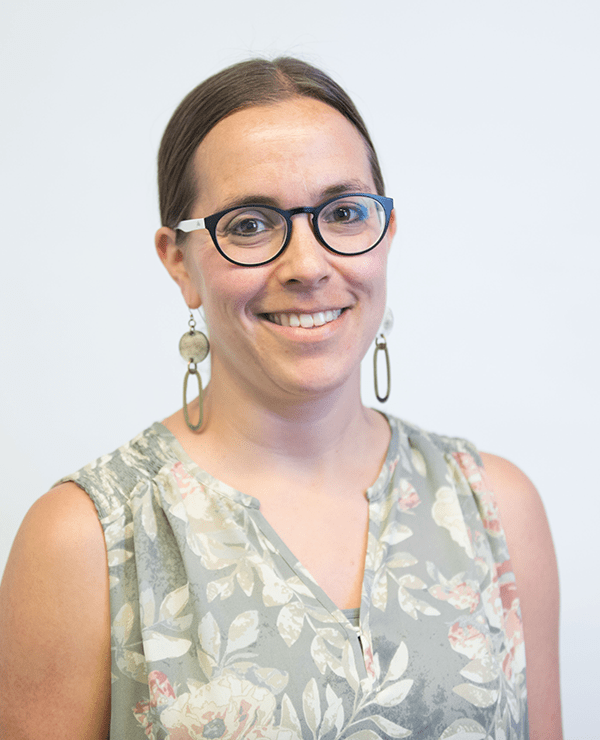
I recently had the privilege of interviewing Eva Muluve from Kenya, who is the Global Senior Manager for Evidence & Insights at Girl Effect. Over the course of our discussion, Eva walked me through her research journey—from her early fascination with sociological frameworks to her current work supporting adolescent girls and young women across Sub-Saharan Africa (SSA). What struck me most about our conversation, though, was her insights on one of the most challenging yet important aspects of research: turning evidence into real-world policy change.
Eva’s story is one of compassion meeting rigorous science. Growing up in rural Kenya, she witnessed firsthand the barriers facing women and girls in her community. She saw how limited access to education constrained their economic opportunities and potential, which was made worse by social norms that perpetuated inequality. These experiences ignited in her a desire to help, which she channeled through academic study in sociology and public health. For the past 15 years, she has worked at the intersection of research and practice, generating evidence on issues surrounding adolescent girls and young women, including sexual reproductive health, economic empowerment, mental health, education, and early marriage, while actively engaging with governments and implementing partners to translate that evidence into action.
The Adolescent Girls Initiative Kenya: an Impressive Piece of Science
We spent a long time talking about what Eva considers her most impactful work to date: her role as researcher on the Adolescent Girls Initiative Kenya (AGI-K), which was launched in 2015 by the Population Council. AGI-K rigorously tested a layered package of interventions combining community violence-prevention dialogues, schooling conditional cash transfers, girls’ health and life-skills clubs, and financial education to support very young adolescent girls in Kenya’s most marginalized settings. The trial generated some of the strongest global evidence on how such “cash-plus” approaches can delay child marriage and early pregnancy while improving girls’ educational, health, and economic outcomes. The study is now in its 10th year and 5th round of data collection, making it one of the longest-running RCTs on girls’ issues especially in child marriage.
The results were remarkable. In Wajir, where social norms strongly influence girls’ schooling and marriage trajectories, the findings were especially striking. Girls who were out of school at baseline and received conditional cash transfers were nearly three times more likely to re-enroll, when compared to their peers in the comparison group. Two years after the intervention ended, they remained significantly more likely to still be in school, and substantially less likely to have married or had a first birth. These sustained gains, combined with improvements in financial literacy and decision-making, demonstrated that meaningful change is possible even in deeply conservative, resource-constrained settings.
AGI-K provided some of the strongest global evidence that layered interventions such as community violence-prevention dialogues, schooling support, life-skills clubs, and financial education can shift the trajectory of girls’ lives when delivered in early adolescence. Although Eva is no longer directly involved with AGI-K as she has since transitioned to another organization, she still follows the study closely. “I’m really looking forward to the next round of data and you should keep an eye out for the results,” she said. “Ten years after the intervention began, it will give us a clearer picture of how those early investments in girls carry forward as they grow up.”
Lessons on How to Move From Evidence Generation to Policy Impact
As all scientists eventually realise, having rigorous evidence is one thing; but getting policymakers to act on it is quite another. There are too many instances of great research findings that sit on shelves unread, because they aren’t communicated accessibly to the policymakers who make decisions that matter. Eva told me about the great lengths she took to avoid this reality: “we spent six years building relationships with county and national governments in Kenya, before seeing their intervention adopted into government strategic frameworks,” she recalled.
When I asked her what made the difference, her answer was clear: communication. “I would say that one of my longstanding lessons, especially being a researcher, has been to try and break down the evidence into simple language that people can understand,” Eva said. “Especially being a quantitative researcher, there’s always the desire to try and show significance, and [emphasize] the Randomized Control Trial design so that people get excited about how rigorous your study has been. But with time, I’ve realized it doesn’t really matter!”
What policymakers want to know, Eva explained, is simple: they’re interested in the “So what?”. They want to understand how research aligns with their priorities and how it can help them solve real problems. Eva broke it down for me, unfiltered: “If you don’t speak to their need, then it doesn’t matter whether you have the best research in the world—that’s not their problem.” Rather that presenting their results in terms of statistical significance—which is what gets academics most excited—Eva and her team reframed the consequences of child marriage in terms policymakers could immediately grasp: maternal mortality, complications during pregnancy and childbirth, stunted children, intergenerational poverty, and mental health impacts on families. “So when you start putting it that way, they’re like, ‘oh – so actually the problem is not child marriage’. The problem is way bigger. It’s almost like a systemic problem with these many, many impacts,” she said.
The advice she shared with me that I considered groundbreaking was this: when talking to policymakers, the work starts before your meeting and is about more than just communication; it’s about showing how the adoption of your approach is feasible. Before talking to their government partners, the AGI-K team did their homework, studying previous government strategies and understanding county structures. They identified existing infrastructure—in the case of AGI-K, it was a system of community health volunteers that could deliver intervention components—rather than requiring entirely new systems. “So our proposal was actually that you already have the structure. You have community health volunteers. The only thing you need to embed in your budget is training component. We have the tools,” Eva explained.
For me, the lesson here is that when researchers want to get their data transformed into policy impact, they have to do the heavy-lifting and give policymakers the least amount of work, showing them exactly where evidence-based programming could fit within their existing budgets and mandates
Adapting Interventions for Scale: The Art of Pragmatic Research Through Co-Creation
Sometimes, translating a research intervention into government policy requires flexibility and co-creation. Eva remembered how when the AGI-K team moved into their testing-for-scale phase, they encountered a significant roadblock: the cash transfer component, while effective, was politically sensitive and lacked a policy framework for government implementation. Education in Kenya is also a national function, meaning local county governments had limited authority to make decisions about educational financing.
Rather than abandoning the intervention, the team adapted. Through extensive consultations with government stakeholders, they learned that county governments found it easier to implement community infrastructure projects—such as building school kitchens or latrines, or buying school desks—than to distribute cash. Thus, the team tested a modified model: in addition to cash transfers, communities would receive grants for infrastructure projects if they maintained a certain number of girls enrolled in school.
The results? “At the end of the day, by the end of the scale up, the results were the same. They were very close actually: the differences was very small,” Eva said. The adapted model achieved comparable impact while being feasible for government implementation—a win-win that perfectly highlights the importance of listening to beneficiaries and remaining flexible.
Eva told me about how the organization she currently works with, Girl Effect, applies the principle of co-creation, by making adolescents and young people central to designing interventions. “Most of the time it’s researchers, program implementers and experts who are creating the designs, and then just giving it to some young people to validate, and then we run it,” Eva noted, which resonated with me because that’s indeed been my experience of interventions I’ve dealt with in the past. “But in Girl Effect, actually, most of the time the model is very different. We just place the needle on the table: the young people create it, they bring it back to us, and we are able to tweak it here and there, and run with it.”
This approach has yielded impressive results, including Wazzii, a sexual and reproductive health chatbot designed by and for young people that has become one of the most trusted platforms in the Kenyan market. “It has won so many awards because it was built by young people by themselves,” Eva stated. Young people drove every aspect of Wazzii’s design—from branding and colors, to placement and content—ensuring the final product resonates authentically with its intended audience.
Advice for Emerging Researchers: Communication, Collaboration, and Decolonizing Research
When I asked Eva what advice she would give to young African researchers, she again emphasized the importance of mastering the art of communication. “We must be able to speak to the needs of communities. We must be able to speak to the needs of policymakers. We must be able to break down this evidence in language that policymakers, decision makers, donors, communities, and all these other stakeholders are able to resonate with,” Eva stated. Technical research skills alone are insufficient if researchers cannot articulate the relevance and implications of their findings.
Beyond communication, Eva maintained the importance of collaboration and humility. “I feel like collaboration is also a very critical component of learning- just having that curiosity to learn from others, having the humility as a researcher, to be able to learn from the people implementing the interventions on the ground, learning from communities,” she said.
Perhaps most provocatively, Eva called for decolonizing research. For too long, she argued, research has been associated with a status hierarchy that prioritizes “rigorous” experimental designs like RCTs, over other methods. “My realization is that even the small voices, even the voices of individuals without even having good structure is very important, because they give us a starting point. It’s the people on the ground really—the voices of the people on the ground—that actually shape like the biggest solutions,” she reflected.
Eva pointed to Girl Effect’s use of Technologically Enabled Girl Ambassadors (TEGA), young girls from local communities trained in basic research skills who collect qualitative data using mobile applications. These ambassadors can record responses in participants’ local languages, which are later translated into English—this style removes language barriers that often exclude the most marginalized voices.
I found Eva’s notion of Research Excellence to be profound: it lies in balancing methodological rigor with responsiveness to community voices, policymaker needs, and implementation realities. It requires patience, because policy change takes years, not months. It demands humility—researchers must listen as much as they speak. And it calls for creativity—adapting interventions to fit real-world constraints while preserving their effectiveness.
Eva’s story is one of a scientist who wants to make a change. The sociologist in her sees behavior as shaped by systems and structures; the compassionate human in her feels compelled to act. These parts of her identity have driven a career defined by evidence, empathy, and impact. For researchers seeking to bridge the gap between research and social change, Eva’s journey offers a roadmap: generate rigorous evidence, speak the language of those you seek to influence, remain flexible and collaborative, and never forget that the most valuable insights often come from the communities you serve.





Leave a comment