
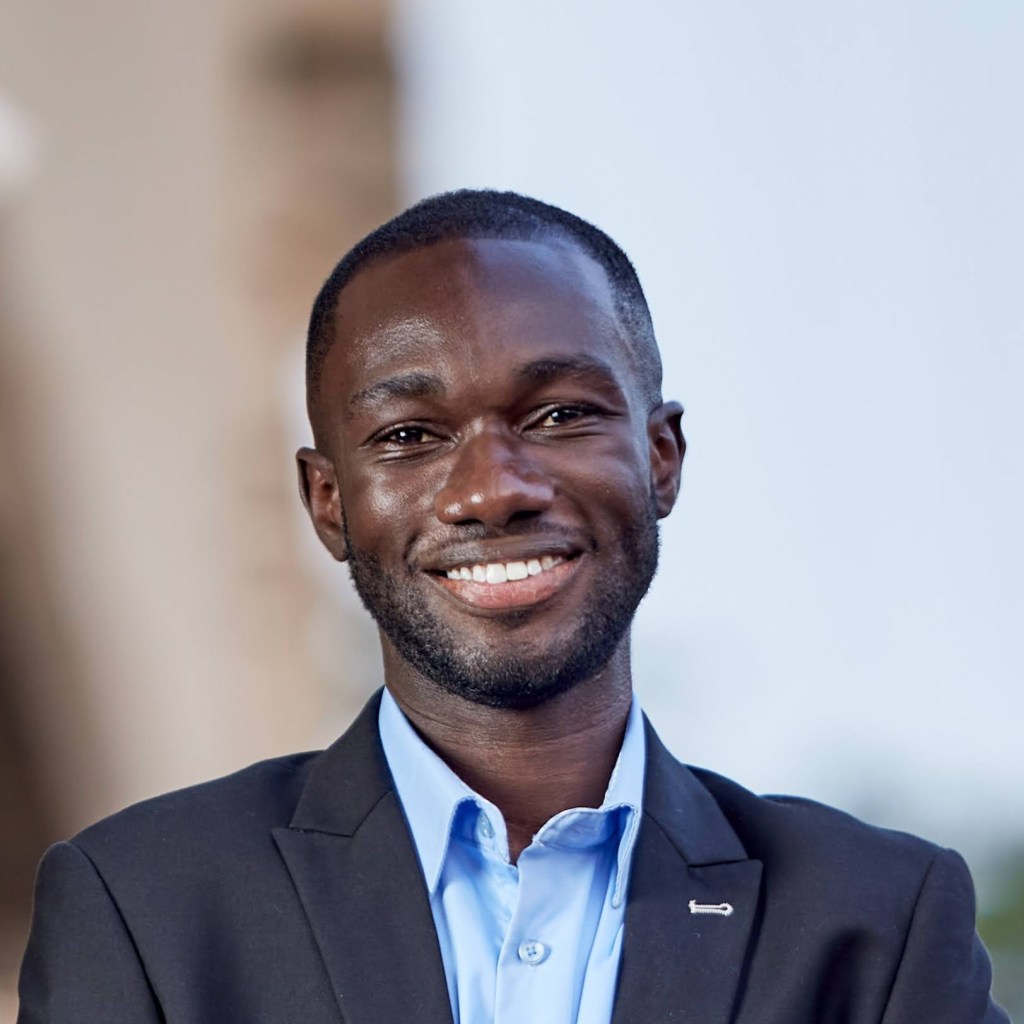
Wilfred Aniagyei is a PhD candidate at Heinrich-Heine University in Düsseldorf, Germany, whose research journey embodies what meaningful global health collaboration can look like. Wilfred was born and raised in Ghana, and completed his undergraduate and master’s degrees at Kwame Nkrumah University of Science and Technology before moving to Germany for his doctoral studies. He described his current research to me, which investigates Type 1 Diabetes in Ghanaian populations; and through our conversation, I was struck by the incredible potential of cross-country research partnerships when built on mutual respect, clear communication, and shared purpose.
Journey Towards Multicountry Research
Wilfred’s path into research began during his undergraduate years in biological sciences, where he transitioned from theoretical learning to hands-on laboratory work. He jumped at the opportunity to join teams that provided diagnoses for influenza and polio, an experience that exposed him to samples from neighboring countries like Benin and Togo. “This got me into a room where I could listen to science as more of a collaborative effort,” he said, reflecting on how these early experiences shaped his understanding of how disease burdens vary across regions. He recognized early on that there were disparities in the voices that get represented in medical research.
This curiosity led Wilfred to pursue a master’s degree at the Kumasi Center for Collaborative Research (KCCR), a German-linked institute in Ghana. Working on multi-country studies which focused on tuberculosis and other infectious diseases, Wilfred found himself at the intersection of different perspectives. “Anytime we have our perspective of the data, as clinicians and researchers from our side, we found another perspective from an outsider looking into the data as well,” he explained. This bicountry collaboration laid the foundation for his current position at Universitätsklinikum Düsseldorf, where he studies how Type 1 Diabetes manifests in African compared with European populations.
Challenging the Textbook Definition of Type 1 Diabetes
Wilfred’s research revealed something that I considered very interesting:
textbooks, which are largely based on European and North American cohorts, may not fully capture the diversity of Type 1 Diabetes presentation worldwide. In a study that was published just weeks before our interview, his team describes how they performed “a holistic characterization of Type I Diabetes in sub-Saharan Africa,” examining clinical presentations, immunological profiles, genetic signatures, and proteomic patterns.
The findings challenge conventional understanding. In the Ghanaian cohort, a significant number of patients showed consistent insulin production by their own bodies, contradicting the common perception of Type 1 Diabetes as a condition marked by complete insulin deficiency. These results point to a more complex picture of the disease’s pathophysiology in sub-Saharan Africa, where classic autoimmune markers may be absent or present at different frequencies than expected. “This is a different mechanism than what we know or have read,” he reflected.
These discoveries have direct clinical implications, in terms of diagnosis and treatment. Wilfred emphasized that the need for local cut-offs for autoantibody positivity, because the standards used for European cohorts simply don’t work in African contexts. This research extends beyond Ghana, with recent studies observing similar patterns across Cameroon, Uganda, and South Africa cohorts.
The Art of Building Effective Global Collaborations
Wilfred has a unique perspective, in that he straddles research in two different worlds: Europe and Africa. I asked him how he makes it work, and what stood out to me most was the emphasis he places on communication as the cornerstone of successful cross-country research partnerships. “Everything is about communication,” Wilfred said emphatically. “You need to be able to understand the language that is spoken by members of the consortium. What are their long term goals and what do they seek to achieve?”
This goes beyond the literal language barriers. From his experience, Wilfred described the importance of people who can sit at the intersection of both settings—in his case, individuals who understand both, the clinical realities in Ghana and the research systems in Germany. He gave me an analogy: “just like how, if you want to go into immunogenetics, you need individuals who know their immunology and who know their genetics: they sit at the intersection of the two fields,” he explained. “If you want to build strong collaborations, you need people who understand the language of Ghanaians, and also understand the language of Germans.”
His team has structured this through mentorships and technical training, with regular exchanges of researchers traveling between Germany and Ghana. This constant flow builds capacity in both systems, providing a platform for cross-country learning as each context learns from the other. In this way, such partnerships are able to leverage the strengths of both settings to improve the quality of their research. I couldn’t put it better than Wilfred: “the things that can’t be done easily in Germany, we realize we can achieve them better in Ghana. The things that we don’t have the chance to do in Ghana, we’re able to do them better in Germany”.
Ghanaian researchers bring back efficient techniques, research tools, and new perspectives on study design through working with German partners. Meanwhile, there’s a lot that German partners learn by working with Ghanaians, such as “the strong relationship between communities and health workers,” which according to Wilfred, makes it much easier to recruit study cohorts and get research started in Ghana compared to Germany.
Navigating Challenges and Pushback
The path hasn’t been without obstacles. Wilfred was candid about the challenges facing African-centered research. He described his expereince presenting findings that deviate from established textbook descriptions; they often face intense scrutiny, especially when they come from historically understudied populations, which makes it more challenging to introduce new perspectives into the field. He responds to this by going above and beyond in demonstrating scientific rigor. “There’s going to inevitably be pushback and you’ve just got to cover your bases,” he explained. Wilfred’s philosophy is to be your own worst critic before anyone else can be.
Beyond scientific scrutiny, infrastructure gaps remain a persistent barrier. Ghana lacks some of the core diagnostic facilities available in Germany, requiring samples to be transported long distances, and reliance on European partners for certain analyses. “It’s something we’re trying to push in our next studies, to be able to build this machinery in Ghana so that we can generate and locally own the datasets that we generate,” Wilfred shared. We circled back to the theme of “local ownership” of research frequently: the capacity for countries to be able to understand what’s happening in their own populations without always depending on external partners. While international partnerships remain valuable, they should
complement—not substitute for—locally led science.
A Vision for African Research
When I asked Wilfred about his dream research project given unlimited resources, his answer illuminated his ambitious vision for research on the continent. He envisions “a strong continent-wide longitudinal study, from diagnosis to long-term outcomes that is powered by a true African diaspora coalition.” The idea would connect African researchers on the continent with those in the diaspora—geneticists in the US, immunologists in Australia, parasitologists elsewhere—all contributing their expertise to shared protocols, bio-banking, analytical tools, and all the myriad of moving parts required to achieve such a study. He firmly believes that there are many Africans working on other continents who would jump at the opportunity to apply their expertise at home, to benefit their own people, if only they had the infrastructure and equipment to support them.
His advice to emerging researchers resonated with this theme of agency: “Don’t wait for perfect conditions.” Rather than chasing global trends or assuming that the local data you have access to isn’t good enough, he encouraged researchers to start with what they have. “Every research question should emerge from local needs and observations. So our needs may be different,” he said. “Seek out networks, seek out mentorships, seek out partnerships, but do not undervalue what you already have and wait for the stars to align before you make a move.”
Walking away from this conversation, I was reminded that global health research at its best isn’t about one side teaching the other—it’s about mutual learning, respect for different contexts, and the understanding that scientific progress happens faster when we leverage each other’s strengths. Wilfred’s work demonstrates that when we build these partnerships thoughtfully, with clear communication and shared ownership, we go beyond just advancing our knowledge, towards fundamentally reshaping what we thought we knew.


Leave a comment