
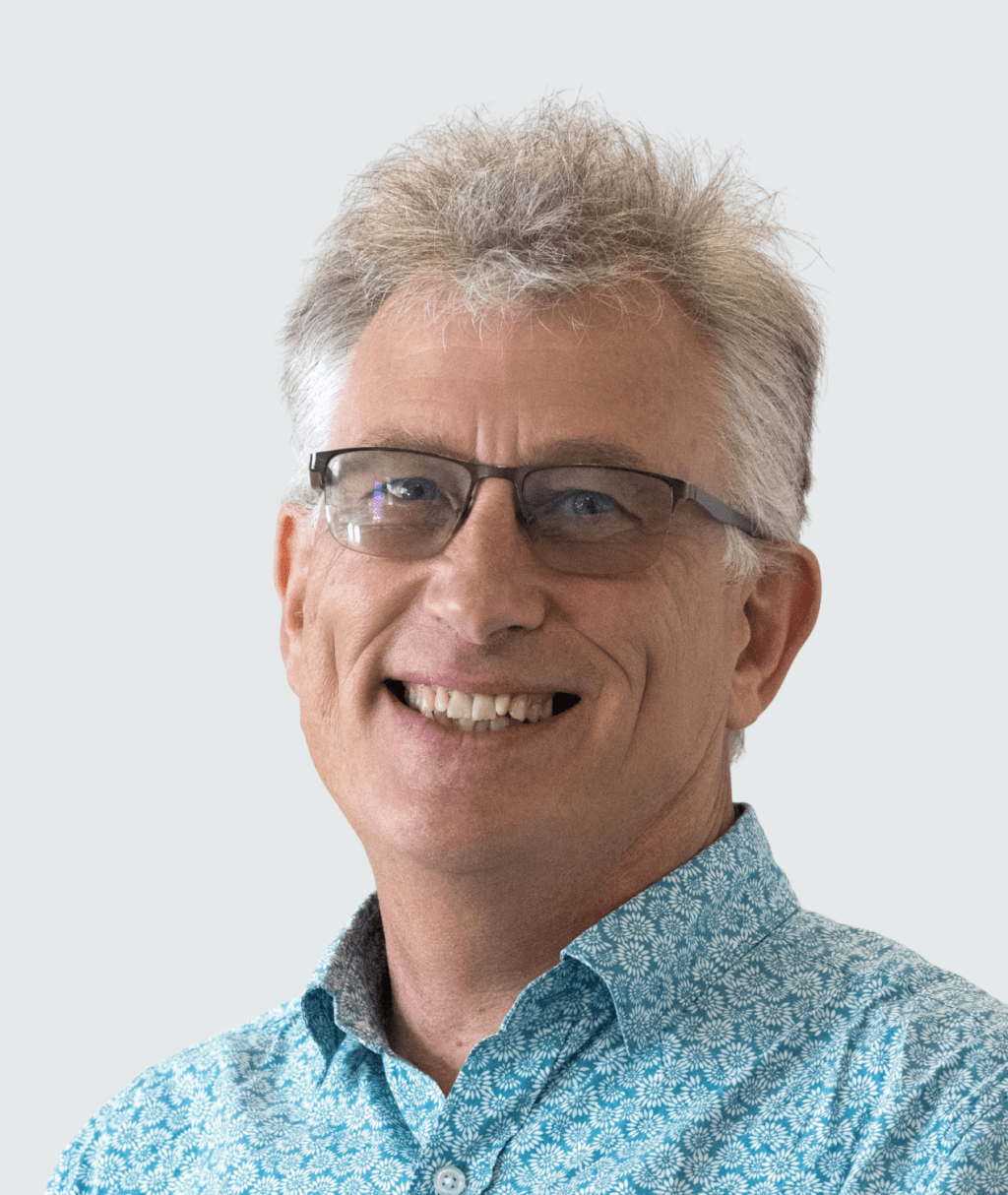
When I sat down to speak with Distinguished Professor Bob Mash, Executive Head of Family & Emergency Medicine and Head of Family Medicine & Primary Care at Stellenbosch University, I was excited to learn from his long legacy of research projects. What I did not fully anticipate, however, was how deeply his work is rooted in years of frontline clinical practice in some of Cape Town’s most under‑resourced communities, and how that experience shaped his vision for research in family medicine and primary care across Africa. In this post, I reflect on our conversation, focusing on his transition from clinician to researcher, the practice‑based research platform he and his team have built to engage interested clinicians in research, and his evolving understanding of the role of family medicine on the continent.
A “Self-Made Researcher”: From Clinical Practice to Research
Prof. Mash described himself first and foremost as a family physician with a long history of working in primary care in Cape Town’s informal settlements, including Khayelitsha and Grahamstown. For years, his daily work was clinical care in what he described as deeply pressured settings, where a handful of health centres served hundreds of thousands of people living in informal housing and facing a heavy burden of illness. The intensity of that environment is part of what nudged him toward academia. As he put it, getting involved with teaching, and later on research, “was something of a survival strategy,” he said, because he needed “other things going on than just battling away at the queue.”
Initially, Prof. Mash’s academic role was heavily focused on education. In the years after the end of South Africa’s apartheid, he was involved in helping to set up the first‑ever training programmes in family medicine for medical students, as well as programmes to train family physicians. Over time, though, his portfolio shifted, and he began to take more of an interest in research. Interestingly, he did not follow the typical academic pathway of Honours–Master’s–PhD. Instead, he described himself as “a self‑made researcher,” remembering that he completed his PhD in family medicine around the year 2001, without having done a Master’s first.
I find it fascinating that Prof. Mash’s journey into research—which would precede a decades‑long career spanning numerous topics and grants, dozens of students trained and global partnerships as he advanced family medicine in Africa—started with a small, practice‑based quality improvement project that he didn’t even consider to be research. He recalled his very first project, which took place while he was working in Khayelitsha, as a modest effort focused on improving asthma care. “I didn’t even think about it as research,” he said. It was only when a colleague suggested he disseminate his findings through a publication that he realised its value. “We wrote it up and published it in the South African Family Practice Journal and realised – actually, people are interested,” he reflected. Prof. Mash’s experience illustrates a reality that might be relatable for clinicians: some of the best research grows out of everyday attempts to solve real problems in the clinic.
Building a Practice‑Based Research Network for Clinicians
What I found to be perhaps the most compelling part of our discussion was Prof. Mash’s description of an actual platform he’s contributed to building, that enables clinicians to engage in research without leaving their clinical practice. It’s called “the Stellenbosch University Family Physician Research Network”, or SUFPREN, and I spend a little time breaking it down here because I think such interdisciplinary platforms are essential to catalyse impactful science. He told me about the structural challenge this model is trying to address, which is something clinicians might find relatable. The idea of being a “clinician scientist” is attractive and glorified, but, in his words, “it’s very difficult to navigate that space if you want to become an established researcher,” especially when clinical salaries far outstrip research posts such as postdoctoral fellowships.
Given that observation, Prof. Mash worked with partners to take a different approach. They recognised that many of the family physicians in their division were primarily clinicians, yet, in his words, they were “continually coming up with really important questions that need to be answered”. In fact, part of clinicians’ job descriptions was to contribute to clinical governance and quality improvement, although this didn’t happen in practice. “None of them ever engaged in research,” he recalled. The barrier was not a lack of research questions, but rather, a lack of time, skills, and structural support.
SUFPREN was designed to bridge that gap. In the network, 30–40 family physicians across the province come together to identify and prioritise research questions that emerge from their day‑to‑day clinical work. Once the group has agreed on a topic, the academic team at the Stellenbosch University takes on the research-related tasks that are hardest for busy clinicians, such as writing up the proposal, obtaining ethics approval, and leading the analysis and write‑up.
Clinicians, on the other hand, contribute by collecting data in their own settings. Prof. Mash explained the benefit of this approach, “if you’ve got 30 or 40 people in your network, each individual only has to collect a very small amount of data, and they’re spread out across the whole province. You can actually get research that is provincial”. The network’s most recent projects have tackled questions such as how patient safety incidents are managed, why so many non‑urgent patients attend emergency centres, and how to understand and better support “super users” who visit facilities dozens of times in a short period.
What struck me was the immediate relevance of the network’s findings, since they speak directly to the functioning of the health system. “Often the questions [clinicians in the network] ask are really important to the health services. That research then feeds back into the managers and policy makers,” Prof. Mash explained. Many of the questions they tackle deal with health service and healthcare delivery improvement. The network tries to generate a continuous pipeline of practice-relevant research, sharing their results in academic publications along with policy partners and health leaders.
Rethinking Family Medicine in African Health Systems
What I found to be perhaps the most compelling part of our discussion was Prof. Mash’s description of an actual platform he’s contributed to building, which enables clinicians to engage in research without leaving their clinical practice. It is called the Stellenbosch University Family Physician Research Network, or SUFPREN, and I spend a little time breaking it down here because I think such interdisciplinary platforms are essential to catalyse impactful science. He told me about the structural challenge this model is trying to address, which is something clinicians might find relatable. The idea of being a “clinician scientist” is attractive and often glorified, but, in his words, “it’s very difficult to navigate that space if you want to become an established researcher,” especially when clinical salaries far outstrip research posts such as postdoctoral fellowships.
Given that observation, Prof. Mash worked with partners to take a different approach. They recognised that many of the family physicians in their division were primarily clinicians, yet they were “continually coming up with really important questions that need to be answered.” In fact, part of clinicians’ job descriptions was to contribute to clinical governance and quality improvement, although this rarely happened in practice. “None of them ever engaged in research,” he recalled. The barrier was not a lack of research questions, but rather a lack of time, skills, and structural support.
SUFPREN was designed to bridge that gap. In the network, 30–40 family physicians across the province come together to identify and prioritise research questions that emerge from their day‑to‑day clinical work. Once the group has agreed on a topic, the academic team at Stellenbosch University takes on the research‑related tasks that are hardest for busy clinicians, such as writing the proposal, obtaining ethics approval, and leading the analysis and write‑up.
Clinicians, on the other hand, contribute by collecting data in their own settings. Prof. Mash explained the benefit of this approach: “If you’ve got 30 or 40 people in your network, each individual only has to collect a very small amount of data, and they’re spread out across the whole province. You can actually get research that is provincial.” The network’s most recent projects have tackled questions such as how patient safety incidents are managed, why so many non‑urgent patients attend emergency centres, and how to understand and better support “super users” who visit facilities dozens of times in a short period. What struck me is the immediate relevance of the network’s findings, since they speak directly to the functioning of the health system. “Often the questions [clinicians in the network] ask are really important to the health services. That research then feeds back into the managers and policy makers,” Prof. Mash explained. Many of the questions they tackle deal with health service and health‑care delivery improvement. The network tries to generate a continuous pipeline of practice‑relevant research, sharing their results in academic publications alongside policy partners and health leaders.
Applying a Behaviour-Change Model to Describe the Dynamics of Family Medicine
Beyond South Africa, Prof. Mash has been deeply involved in documenting how family medicine is emerging across sub‑Saharan Africa and in supporting other countries to develop training programmes. He described using the “stages of change” model—which is commonly applied in behaviour change counselling—as a lens to think about where countries are in their “family medicine journey.” They might be in a “pre‑contemplative” stage (not considering the discipline at all), progress to contemplative (active consideration of family medicine), action (setting up family medicine programmes), and finally to maintenance (well‑established family medicine programmes).
He argued that it’s helpful to break down a country’s journey in this way, because each stage has different research and advocacy needs. As he put it, there is “a whole menu of different research questions that relate to which stage you’re at in that journey.” For example, in “pre‑contemplative” or “contemplative” settings, it’s important to present evidence from countries where family physicians are already established, because the goal is to convince ministries and regulatory bodies. This is not as relevant in “maintenance” settings, where the focus shifts toward scaling up, improving training quality, and measuring the impact of established programmes.
Personally, I found it impressive how Prof. Mash borrowed a tool from one discipline—behaviour change—and adapted it to solve new problems in an entirely different discipline. He has used this framework to think systematically about what kinds of questions to ask, which stakeholders to engage, and how to tailor support to countries at different stages. To me, it’s an example of innovation at its best.
Advice for Emerging Researchers
When I asked Prof. Mash what advice he would give to young or emerging researchers, especially clinicians who are contemplating getting more involved in research, he returned to the importance of starting small and building confidence along the way. He recalled his early asthma project and how surprising it was to discover that others found it publishable. For researchers starting at the beginning, Prof. Mash’s message is to “do something small, get involved, develop the toolkit, have good mentors.”
Along this line, he encouraged early‑career researchers to seek out journals that are designed to provide support and mentorship in the peer‑review and revision processes as their first attempts at publishing. He cited the African Journal of Primary Health Care and Family Medicine, for which he is Editor in Chief, as an example of such a platform.
As a young researcher myself, I came away from our conversation encouraged by how grounded Prof. Mash’s approach is in the realities of clinical work and African health systems. His own path—from research being a “survival strategy” to cope with the pressures of clinical practice, through a self‑made PhD and multiple research streams, to building networks and platforms that create space for others—reminded me that impactful research does not have to be disconnected from day‑to‑day clinical care. In fact, in his case, it is precisely the opposite: the most powerful questions, and some of the most creative solutions for answering them, started at the clinic.


Leave a comment