
Listen to the article
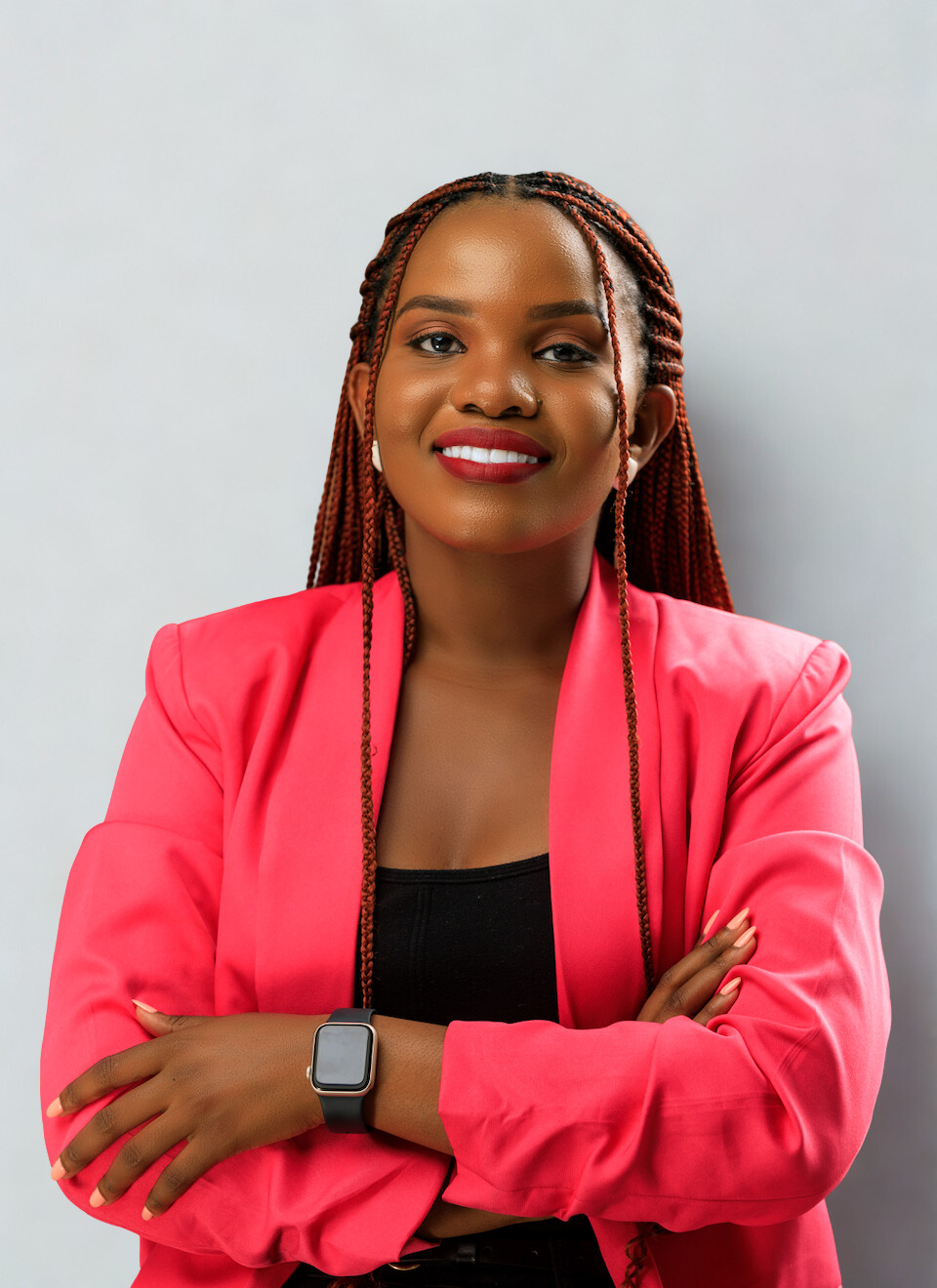
I recently had the pleasure of speaking with a kindred spirit who shares my passion for scientific communication and research visibility: Maria Magdalene Namaganda is a PhD candidate in Bioinformatics and Data Science at Makerere University in Uganda, where she develops machine learning models to predict HIV virological failure using national program data. Over the course of our conversation, Maria told me about the impressive career she’s built at the intersection of computational biology and public health as a part of the pioneering bioinformatics cohort in Uganda. If that wasn’t impressive enough, Maria also spoke to me about her passion for building CareerBiome: a space dedicated to making science accessible, humanising researchers, and building mentorship networks across Africa.
What excited me most about our discussion was Maria’s conviction that research cannot exist in a siloed, fragmented ecosystem. She wholeheartedly believes that groundbreaking research means little if it remains locked away in academic journals, inaccessible to the communities it aims to serve.
From Wet Lab to Dry Lab: Journey into Bioinformatics
Maria’s path to bioinformatics wasn’t predetermined or linear. She began her career with a degree in Biomedical Laboratory Technology from Makerere University, spending years at “the bench” doing molecular biology work: experiments involving phlebotomy, DNA and RNA extraction, Polymerase Chain Reaction (PCR), and sequencing. During the COVID-19 pandemic, she served on Uganda’s national rapid response team for surveillance and testing. These experiences allowed her to grasp the technical aspects of data generation, but also made her notice a gap: ” I didn’t particularly understand where this data was going,” Maria recalled. “I knew how to generate it, but I was like, okay, what happens from this step to the next?”
That question led Maria to pursue a Master of Science in Bioinformatics, making her part of one of the pioneering cohorts for this program in Uganda. The transition was challenging on multiple levels. Coming from a biological background, Maria had no prior coding experience, yet the bioinformatics program demanded proficiency in coding languages like bash scripting and Python. “It was a steep learning curve,” she acknowledged.
The mixed experiences of her bioinformatics cohort—which included students from computer science backgrounds alongside those from biological sciences—created a collaborative learning environment. “We [biologists] could help them [computer scientists] with the heavy biological terms and the concepts of molecular biology that they didn’t understand, and they would help us in understanding coding,” Maria said.
For Maria, switching to bioinformatics was a turning point that unlocked opportunities, such as invitations to speak on panels, travel grants, and expanded networks – possibilities were endless in this emerging field. However, the journey certainly had its challenges, such as limited options for mentors, lack of high-performance computing infrastructure, and skepticism about career prospects in a field few Ugandans understood. Yet Maria stayed true to the course, emphasizing the importance of dreaming big and being visible: “I think when you put yourself out there, when you stay committed to learning, when you ask where you don’t understand, and definitely also use social media. In some of these conferences you go to, put up your posters so people get to see what you’re doing,” she reflected.
Maria’s PhD research now focuses on developing machine learning algorithms to predict HIV virological failure, which occurs when antiretroviral therapy (ART) fails to suppress and sustain a patient’s HIV viral load. The project has three objectives: understanding the prevalence of HIV virological failure across East African regions through systematic review and meta-analysis, conducting descriptive analysis of longitudinal patient data, and training predictive models using supervised machine learning and training algorithms like logistic regression and random forests. Maria’s work recognizes that virological failure is influenced by factors beyond biology. “Factors like poverty and stigma affect how people adhere to the drugs. It was very interesting to look at some of those predisposing factors that make someone fail the treatment,” she noted.
This understanding of social determinants underpins Maria’s drive for developing models that are accurate, and of equal importance, usable. The utility of Maria’s research is that it identifies patients who are likely to fail HIV treatment, and enables early intervention.
CareerBiome: Building an Ecosystem for Scientific Stories
When Maria talks about CareerBiome, enthusiasm lights up on her face. CareerBiome is an online platform Maria built that responds to an important observation, which perhaps many of us in the science community may relate to: scientists and researchers tend to work confined within the realm of laboratories and publications, remaining disconnected from the general public, who are generally supposed to be directly impacted by the work in question. “I noticed that most of the time, scientists and researchers are confined. They’re in silos, they’re working in isolation,” Maria reflected. “And one of the gaps I noticed was that the work we do in research speaks to the general public. So we need to find ways to involve them.”
Maria told me how this idea is deliberately addressed in the platform’s name, CareerBiome. Maria explained, “I named CareerBiome because a biome is an ecosystem where things thrive and flourish. And so, you can’t look at things in isolation”. In the case of research, it’s an ecosystem composed of ideas, networks, funding, mentorships, and so much more. This holistic vision is at the heart of everything Maria does on the platform, such as hosting senior scientists to reflect on their research journeys, or breaking down complex scientific concepts into digestible content.
This approach humanises research in a way that conventional research dissemination portals never can. In CareerBiome, Maria works to humanise the processes and people behind science. She said something I found immediately relatable: “When you read a publication, you might not know who the person [the author] is. But these people have hobbies, these people have interesting stories, they have ways they’ve navigated challenges.”
This humanisation matters because, firstly, it makes science more accessible and relatable to general audiences. It also promotes the uptake of research findings, and research is only as valuable as its impact. Second, it breaks down the false dichotomy between being a scientist and being a creative. Maria has faced criticism for her content creation work, with some suggesting she should focus solely on science. Yet she argues for a more open-minded view. Creative outlets should be embraced since they contribute to well-being, and ultimately help researchers “show up better” in their work.
The Pillars of Research: Mentorship as an Ecosystem
What makes CareerBiome innovative is its dual purpose: more than just a portal for science communication, it serves as a mentorship space where early-career professionals can learn from those who have navigated similar paths. Maria uses the networks she has built throughout her academic journey to create opportunities for dialogue that rarely happen in formal academic or research settings. “I wanted to understand the people behind the science,” she said.
Throughout our conversation, Maria brought up how mentorship is a cornerstone of scientific success. She describes mentorship as “someone holding your hand and showing you the steps to get there. It doesn’t mean they’re going to do that work for you, but they’re going to try and guide you through the journey.” Her own bioinformatics journey was supported by mentors like her current supervisor Gerald Mboowa, who provided guidance even when the field was new to Uganda.
Maria drew a distinction between “supervisorship” and “mentorship”. According to her, supervision can sometimes feel “very technical and quite closed off,” focused narrowly on deliverables like publications. Mentorship, on the other hand, is more comprehensive. “A mentor is able to notice what extra skills you bring, and how can you nurture those? How can they contribute to your career journey?” she explained. Good mentors have their mentees’ interests at heart, listen well, provide constructive feedback, and help mentees see the bigger picture beyond immediate tasks.
Importantly, Maria challenges the notion that only senior researchers can be mentors. “I think many times people call themselves out of particular roles,” she observed. “Wherever you are, you’re able to make a difference, you’re able to make a change, you don’t need to be in a particular position.” As a PhD student, she mentors master’s and undergraduate students, inspiring them with reflections on how she navigated earlier stages of her journey. The key is transferable skills and the willingness to invest in others’ growth.
Maria’s Advice for Emerging Scientists
To anyone seeking a mentor, Maria offers some practical suggestions: Be strategic about networking by attending conferences and workshops where people in your field of interest gather. Read the work of any researchers you’re interested in ahead of time, so that you can have meaningful conversations rather than surface-level interactions. Importantly, she reminded us to be relentless in reaching out despite inevitable rejections. “Do not take rejection to heart,” she emphasised. “A rejection is not a reflection of your worth.” She also recommends making use of emerging technological platforms, mentioning The Village, which uses artificial intelligence to match mentees with mentors based on professional profiles.
According to Maria, mentorship requires proactivity, openness to constructive criticism, clear communication, and sometimes volunteering time to demonstrate commitment and capability. “If someone is walking the journey with you and trying to show you what steps to take, then you have to be willing to be open to mentorship, to criticism, but which is constructive,” she said. The relationship works best when it’s mutually beneficial rather than purely transactional.
Maria encourages young researchers to have an openness to learning, a willingness to pivot as interests evolve, and to focus on human-centred research that directly impacts communities. She’s particularly excited about Africa’s data revolution, and the potential of locally developed tools that understand regional contexts better than imported solutions ever could.
Maria’s final piece of advice returns to the human element in research. She reminded us to “Enjoy the journey because the science can be very lonely. So explore your creativity as well.” She encourages researchers to take care of themselves, pursue hobbies, and recognise that they are people first, not just researchers. “You can show up better if you’re happy. You can’t pour from an empty cup.”
As I reflected on my conversation with Maria, it occurred to me that her work with CareerBiome and her approach to bioinformatics research are two sides of the same coin. Both emerge from a fundamental belief that research is an ecosystem—interconnected, collaborative, and deeply human. Whether she’s training machine learning models on HIV data or interviewing fellow scientists about their journeys, Maria is building bridges. In an era when African research capacity is growing rapidly, we need more researchers like Maria—people who understand that visibility, mentorship, and community engagement are not distractions from the work, but essential components of meaningful science.

Leave a comment