
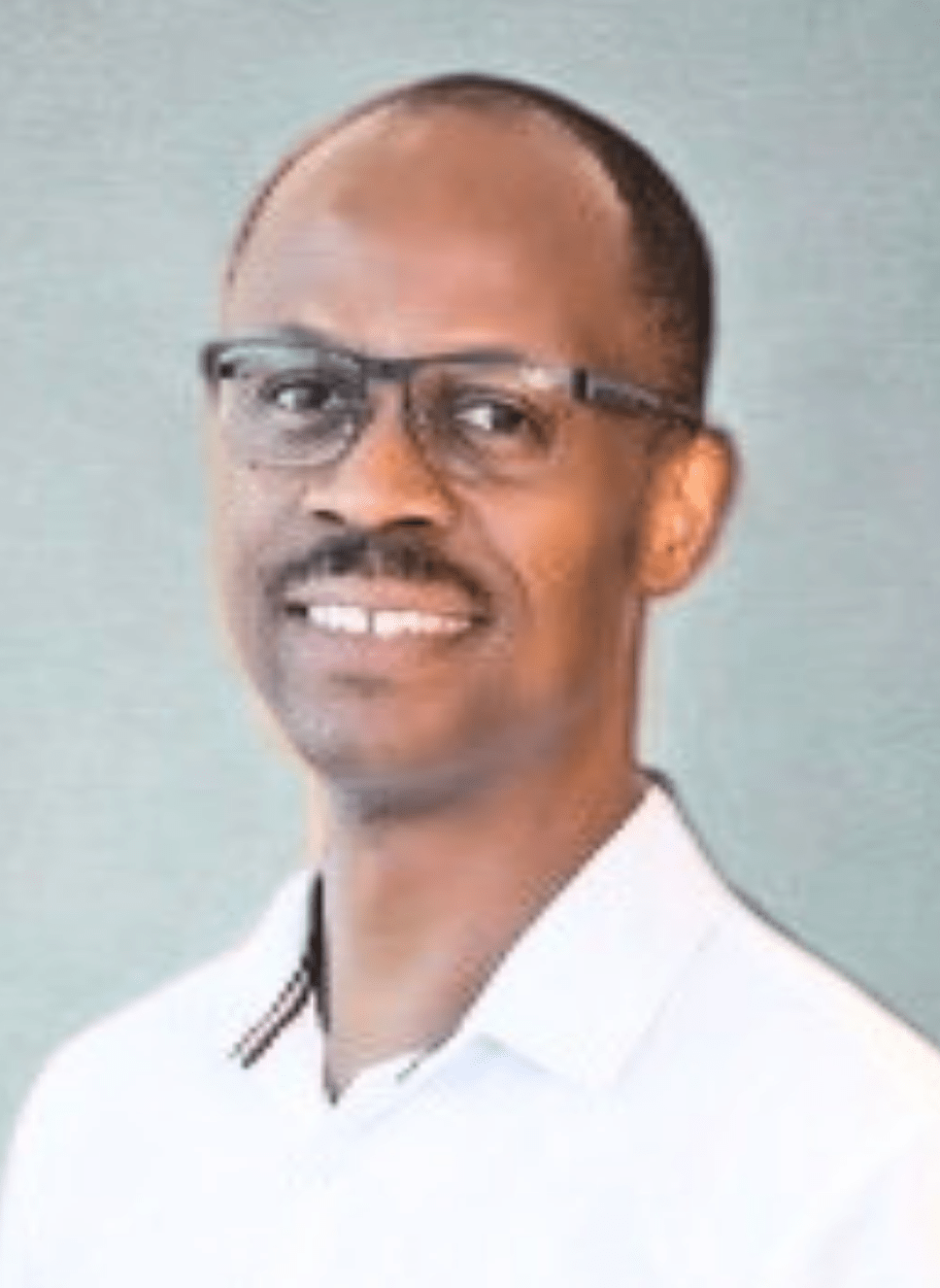
Dr. Kenneth Yakubu is a Nigerian family physician turned health systems researcher, now a Post-doctoral Research Fellow at The George Institute for Global Health in Sydney, Australia, where he also serves as Co-Lead of the Ubuntu Initiative for Research Partnerships in Africa. When we spoke, what stood out to me immediately was the way he thinks about research—as a process that must move at the speed of people’s lives, not at the speed of tidy protocols. Time and again over the course of the interview, we circled back to an important realisation: if research methods do not allow us to really hear participants and sit with the messiness of their realities, then even the most sophisticated study designs will miss the point.
I consider this to be a refreshing perspective. Dr. Yakubu starts his research approach by asking himself: Who is this person in front of me? Who surrounds them? What social, cultural, political and spiritual worlds are they embedded in? Only after considering these dimensions does he decide how to study the problem. That deliberate slowing down—the time he takes to match each question with a method that can hold complexity—preserves the core of what research is supposed to be about.
Research as a “Sanctuary”
The word that comes to mind to describe Dr. Yakubu’s relationship with research is “spiritual”. One of the phrases that’s stayed with me since our conversation is how, early in Dr. Yakubu’s journey, he thought of research as being his “sanctuary.” When he started out as a family physician in Northern Nigeria, he often found himself facing patient encounters that medical school had not prepared him for. For example, textbooks could not explain why two people with the same diagnosis would react so differently to bad news, or why some treatments that looked perfect on paper did not work in real life. When encountered with such discrepancies, he told me that “research for me became my sanctuary to make sense of what was not making sense.”
Dr. Yakubu described how research also gave him a way to respond constructively to the frustrations of working in a system facing infrastructural constraints. “Research, for me, was a place for me to go and not just problematize or complain, but to use my mind and invite people into a reflection of how can we make it work,” he shared. This mindset is very different from treating research as something that happens far away from day-to-day practice. For Dr. Yakubu, his research and clinical selves grew up together, and he gradually realised that he needed both to answer the questions that mattered to him.
Learning to Ask Better Questions
Early on in his career – back when Dr. Yakubu was a practising clinician – he remembered how even though research felt natural to him, the way he was initially taught to “do” research was quite narrow. During his fellowship training, Randomised Clinical Trials (RCTs) were being heavily emphasised, such that other methodologies – especially qualitative ones – were barely even considered to be research. That perception shaped his early work, which was primarily quantitative; however, he felt that something was missing.
The turning point came when Dr. Yakubu pursued a Master’s degree in philosophy of family medicine at Stellenbosch University in South Africa, where he encountered qualitative methods for the first time. In a department deeply engaged with community-oriented primary care, he was suddenly surrounded by researchers using interviews, observations and narrative analysis to understand what was happening in communities, rather than treating people mainly as data points in a table.
Dr. Yakubu remembered how this exposure was both exciting and humbling. He told me about how he chose to do a qualitative thesis for his Master’s, essentially putting himself through a crash course in how to think in stories rather than only in statistics. Over time, he began to see that many of those unexplainable situations from his clinical work—like why people respond so differently to similar events—could not be answered by RCTs alone. Rather, they necessitate a deeper understanding of people’s contextual factors, meaning-making processes, and everyday realities. These are different kinds of research questions, and therefore require different methods.
Three ResearchMethodologies That Honour Complexity
Today, some of the methods that excite Dr. Yakubu most are explicitly designed to embrace complexity rather than smooth it away. We spent some time discussing three approaches that have become central to his work, which provided me with a deeper appreciation for this sort of research.
The first approach is called qualitative social network analysis, which Dr. Yakubu used during his PhD investigating the migration of skilled health workers from Nigeria. He resisted the conventional approach for answering the question of “Why do people migrate?” with a list of push and pull factors, which often reduces migration to a series of individual decisions taken in isolation. Instead, he used qualitative social network analysis to examine how people’s relationships or “networks”—including their colleagues, friends, family, and professional networks—influenced their intentions to stay or leave.
Through this lens, Dr. Yakubu uncovered complex mechanisms by which people’s networks influence their decision-making. For some health workers, joining certain networks introduced a sense of dissatisfaction with the status quo and opened their eyes to opportunities abroad. For others, networks served as spaces to process frustrations and improve conditions locally. The same idea of “network” meant different things depending on a person’s motivations and history. This kind of nuance is hard to capture if you only ask people to tick boxes on a questionnaire. It becomes visible when you listen to how they talk about who they are connected to, what those connections provide and how that changes their thinking over time.
The second approach Dr. Yakubu told me about is Critical Realism, which starts from the recognition that what we can easily measure is only the visible tip of a much larger iceberg. A survey might tell you how many participants reported a certain outcome, but it says far less about why that outcome emerged in one person’s life and not another’s. Critical Realism asks: what were the underlying conditions, structures and mechanisms that generated this result?
When employing a Critical Realist approach, Dr. Yakubu reads people’s accounts like a careful investigator, looking for clues about the norms shaping people’s choices, the resources they had access to, and the prior experiences that made certain responses more likely than others. He uses Critical Realism in his current program evaluation study, which goes beyond simply asking whether the program “worked.” Instead, he traces how, for who, in what circumstances and the extent to which interventions work or fail to work for people. That level of explanation requires moving back and forth between theory and lived experience, adjusting possible explanations until you find a fit. It’s a little like being a mechanic who listens to a customer’s description of their car’s problem, then draws on patterns from many previous repairs to infer what might be happening under the hood.
The third approach Dr. Yakubu uses is called “Knowledge at the interface”, and it brings in yet another dimension: here, he intentionally sets Western scientific theories alongside indigenous and local ways of understanding causation, then considers how they speak to each other. When he and his colleagues see a pattern in the data, they don’t assume that Western scientific frameworks alone provide the best explanation. He will also ask: How would people from the community explain this? What do their knowledge systems say about why such things happen? The goal is not to replace one with the other, but to see where they converge, where they clash and how both can deepen understanding.
Research Rooted in African Realities
Underpinning all of this is Dr. Yakubu’s commitment to keeping people’s lived realities at the centre of his work. He spoke about growing up in Northern Nigeria, where history and context shape how people and communities relate to each other. That awareness makes him uncomfortable with research that treats people as isolated, interchangeable individuals.
Having started his journey as a clinician in communal settings, Dr. Yakubu is instinctively critical of models that assume health is just about individual choice and biology. He reflected, “when people came to see me, I know that a village has followed them and they are outside my door.” He has seen firsthand how health is entangled with family dynamics, economic constraints, religious obligations, gender norms and political decisions. For him, it would be strange—almost dishonest—to design research that disregards those factors. That is why he gravitates toward methods that take relationships and context seriously, whether in family-centred care, health worker migration or community-based interventions.
Dr. Yakubu is also very clear that African researchers bring essential ways of thinking to global health conversations, that are less individualistic and less narrowly biomedical. Rather than treating Western theories as universal, he urges researchers to deeply reflect: is this framework actually useful, and does itmake sense in this particular setting—be it a Nigerian teaching hospital, a South African township, or a community elsewhere on the continent?
For Dr. Yakubu, part of the work of the Ubuntu Initiative for Research Partnerships in Africa is to create spaces where these questions can be asked honestly, and where African scholars and the communities they serve can take ownership of research questions and methods from the beginning.
Towards the end of our conversation, Dr. Yakubu spoke about research in almost spiritual terms—as a form of worship, a way of paying attention to how people live and change. Research provides a chance to give voice to communities that are often spoken about but rarely listened to. In his words, “research should be transformational”. The role of research is not just to describe the world, but to shift how people think, how systems function and what futures become imaginable.
Listening to Dr. Yakubu, what stayed with me most was the patience in his approach. He is willing to admit that sometimes, there is no simple yes-or-no answer to a question. He follows a story where it leads, and when grappling with difficult questions, chooses methods that can hold the weight of lived experiences. In a research world that often rewards speed and simplicity, Dr. Yakubu’s perspective feels like a silent but powerful act of resistance—and an invitation for the rest of us to slow down, listen more carefully and let our participants’ realities, rather than our preferred methods, shape the questions we ask.


Leave a comment