
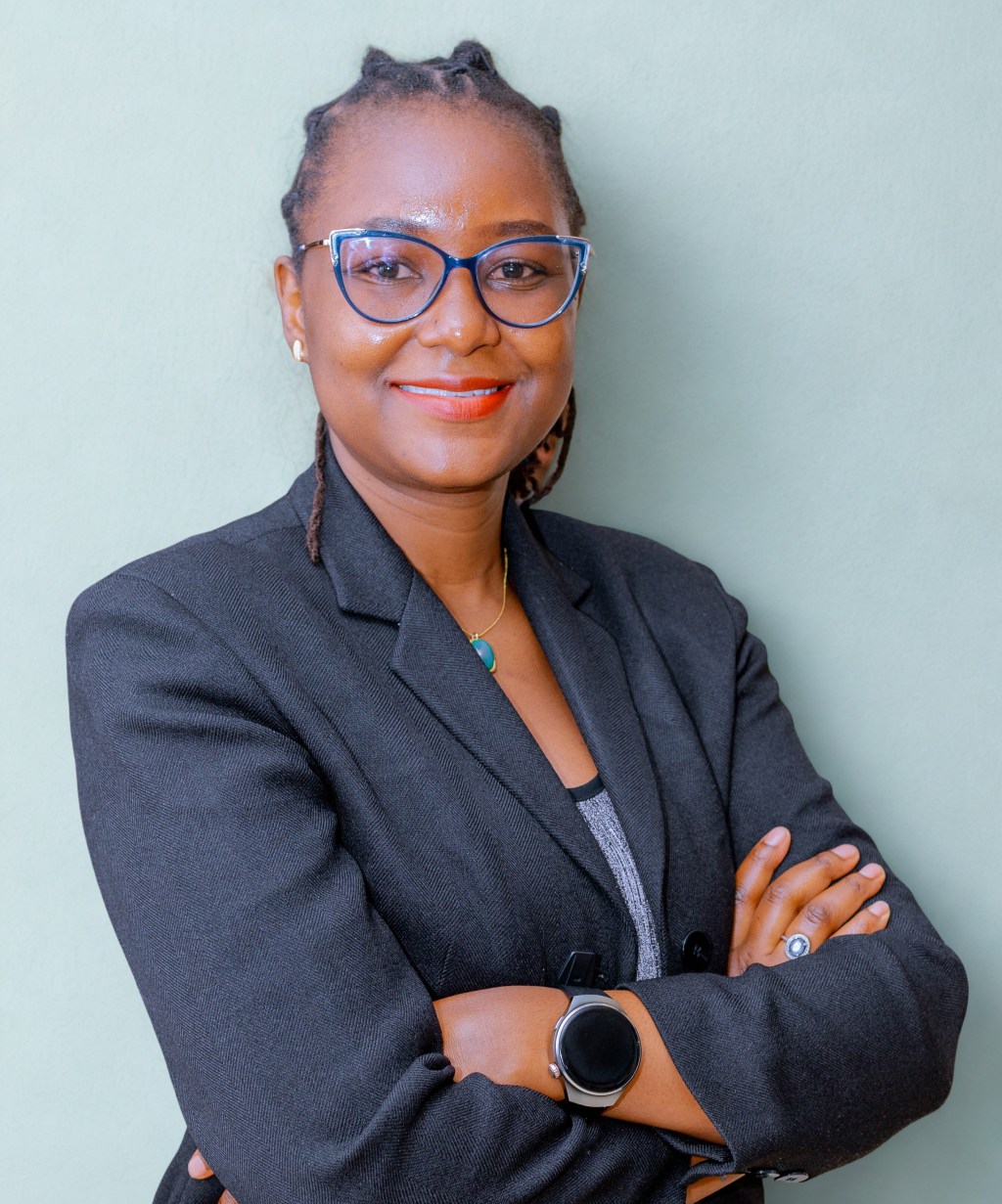
I had the pleasure of connecting with Dr. Aneth David, a lecturer in the Department of Molecular Biology and Biotechnology at the University of Dar es Salaam, last month. Our conversation touched on her research in microbiome science, her role in founding the Tanzania Human Genetics Organisation (THGO), and the realities of conducting this type of research in her context. Dr. Aneth inspired me by how she approaches her work—as a scientist willing to start from scratch, make mistakes, and learn as she goes rather than waiting for resources and the perfect conditions.
Microbiome Research in Context
Dr. Aneth’s research sits at the intersection of health and agricultural systems, where she deals with microbiome science, which is the study of microbial communities in specific environments. Specifically, Dr. Aneth characterises how the gut microbiome of children relates to stunting. The “gut microbiome” is a fascinating, complex community of trillions of microorganisms—including bacteria, viruses, fungi, and archaea—that reside in the human digestive system; it plays a role in digestion, metabolism, and immune system regulation, providing defence against harmful pathogens. The problem Dr. Aneth’s work addresses stems from a puzzling observation: in some regions where food is available and diverse, stunting rates remain high. Her research team is investigating whether other factors—including the microbes that live in children’s guts—might explain this discrepancy.
Dr. Aneth uses methods that are rigorous but, at their core, practical. The team goes into communities, surveys families about their diet and living conditions, collects stool samples, extracts DNA, sequences bacterial populations using a technique called 16S metabarcoding, and then analyses the data using bioinformatics. Early findings suggest that there are sex differences in stunting rates and patterns of microbial enrichment, though the data analysis is still ongoing. What I found particularly significant is that this research addresses a regional gap. “A lot of research on microbiomes is going on worldwide at the moment, looking at its mechanisms,” Dr. Aneth noted, “but a lot of that research is not done in Africa, or on African people.” Her work fills that void, grounding microbiome science in African contexts where it’s most needed.
Building Unity from Fragments: The Tanzania Human Genetics Organisation
When Dr. Aneth and her co-founders decided to establish the Tanzania Human Genetics Organisation about six years ago, they recognised a problem that many researchers in developing countries face. “There was a lot of human genetics research and application going on in Tanzania, but it was fragmented,” she explained. “Foreign researchers would come to Tanzania, collect some data – sometimes as part of a regional study with a few Tanzanian authors listed – but we weren’t sure how to access or use the data.”
Dr. Aneth and her colleagues decided to address this by being proactive, beginning with passion and steps that they could take immediately. Despite having no external funding or support, they assembled the THGO into an organisation that now has roughly 300 members and operates across five focus areas: advocacy, research, therapeutics, training, and diagnostics. I was impressed by how they’ve managed to accomplish so much with limited resources—it occurred to me that many research institutions in the Global South face this same challenge, and might be inspired by Dr. Aneth’s story.
When I asked Dr. Aneth how they built the association from nothing, she offered honest advice: “I usually advise people not to register an association immediately. First, come together and build momentum. For example, we are researchers—we always have seminars and journal clubs. Start with something.” The THGO began forming a presence on social media, contributed money from their own pockets for a website, and leveraged free platforms to write articles and secure radio interviews. Her advice reminded me of a pragmatic philosophy that I’ve encountered among groups who are driven by passion to achieve a larger vision by starting small: “You build the plane while you’re flying it.”
Importantly, Dr. Aneth and her team invested early in early-career researchers and students. Rather than hiring event planners or external consultants, they recruited undergraduate and master’s students, trained them, and involved them in running the organisation’s activities. This approach served a dual purpose: it kept costs manageable while providing invaluable experience for young researchers trying to build careers in biotechnology and human genetics.
Beyond setting up the THGO to connect like-minded researchers, what distinguishes Dr. Aneth’s profile is that science communication isn’t ancillary to her work—it’s central. She writes for newspapers and magazines, and has been posting frequently on social media, talking about biotechnology topics. She makes every effort to make her content relatable for Tanzanians by writing in Swahili: “When we talk in English, and many people are native Swahili speakers, it mystifies the science a bit.” She balances technical accuracy with accessibility, using English terms where Swahili equivalents don’t exist while explaining concepts for a general audience. This commitment emerged organically in Dr. Aneth’s career. As a master’s student, she attended a science communication training and started a blog. Later, she became a forum ambassador, which pushed her into public engagement—she talked to primary school students, hosted events, and met with stakeholders. When social media became mainstream, she saw it as another community engagement avenue. She emphasised that the skills didn’t come from formal training alone, but rather from practice and observing what works in the real world.
Navigating Challenges with Ingenuity and Perseverance
Conducting research at the University of Dar es Salaam comes with significant obstacles, of which funding is perhaps the most immediate. “Funding, funding, funding,” Dr. Aneth emphasised. The institution – like many other in the region – relies on external funders and grant support for PhD and master’s students, but she and her colleagues have learned to do more with less. For instance, the THGO is currently conducting a study that looks at why samples are still routinely sent out of Tanzania for sequencing, despite there being an abundance of local sequencing capacity, with some institutions having advanced technology such as Illumina machines or nanopore systems. Rather than waiting for large grants, the THGO conducts small-scale research with minimal resources, leveraging online surveys, pilot studies, and writing position papers. “We create something before we try to convince funders and donors about funding,” she said.
Beyond funding, mentorship presents a distinct challenge. While there are researchers in biotechnology and human genetics in Tanzania, many are extremely busy with advancing their careers and juggling multiple responsibilities. Moreover, the field is evolving rapidly, and it’s difficult to find mentors who occupy an interdisciplinary approach, that balances academic excellence with science communication, policy engagement, and ethical practice. Dr. Aneth herself embodies this integration, which means she often finds herself charting her own path. “You may see professors and senior people in the field, but you don’t see them where you want to go,” she reflected. The additional set of skills required to be interdisciplinary, such as navigating regulatory frameworks, engaging policymakers, or negotiating ethical guidelines, must often be learned on the job.
Another type of challenge that researchers may face involves uncovering evidence that raises uncomfortable questions about accepted practice. One of Dr. Aneth’s defining experiences came during her PhD, which looked at the widely accepted “push-pull system” of farming technology, an intercropping-based technique developed in Kenya where farmers plant leguminous companion crops alongside maize to repel pests naturally, thereby avoiding the need for pesticides. For nearly 20 years, the prevailing explanation for this phenomenon was that the legume plants emitted volatile compounds that repel insect pests. During her PhD, Dr. Aneth investigated the soil microbiome in these push-pull systems, expecting to find supporting evidence for the volatile compound mechanism. She and her supervisor designed an experiment, collected samples from Tanzania and Kenya, and analysed them, expecting to confirm the presence of a volatile profile. Instead, “I didn’t see anything,” she recalled.
The response from the scientific community was difficult, with colleagues questioning Dr. Aneth for reporting findings that challenged conventional understanding. Yet she stood by her findings. When I asked how she navigated the pushback, she reflected, “It wasn’t easy.” But she and her supervisor believed in the data. “I’m not disproving anything,” she said. “I’m just saying, when we did it, this is what we saw.” This willingness to report what the science showed, even when it contradicted established theory and threatened professional relationships, speaks to a researcher committed to evidence over convention.
Advice for Emerging Researchers: Getting Your Foot in the Door
As someone who considers herself to be early in her career, Dr. Aneth has thought carefully about what emerging researchers need. She advised against thinking that you must start in the lab. “Research is very hands-on, and you need to get that hands-on experience,” she said, “but you don’t have to start in the lab.” Instead, she encouraged young people to find their way into research spaces by attending conferences, volunteering with organisations, following social media accounts of researchers and institutions. “You get theoretical experience, but you also widen your horizon that way, and get practical skills,” she said. Dr. Aneth encourages emerging researchers to explore broadly, get experience in many forms, and then identify where your interests, passions, and opportunities intersect.
Speaking with Dr. Aneth David reinforced something I’ve come to appreciate even more deeply in my research work: that the most compelling science often comes from those willing to build something from nothing, learn as they go, and trust their findings even when those findings make people uncomfortable. Her journey demonstrates what becomes possible when researchers approach challenges as problems to solve with ingenuity, collaboration, and sheer determination.

Leave a comment